The Veil War

"and then I was like, 'Holy crap, goblins!'"

The Really Big Idea: Steve Umstead

Steve Umstead has been exceedingly generous in providing helpful advice to me in the short time that I have been above water as an author. So naturally, I asked him to help some more… But at least this time, we have the thin fiction that this is self promotion for him. The Gabriel story is the kind of thing that I always imagined that I would be writing when the time came. Space ships, action, conflict, and intrigue. Science fiction in the classic mode. Sometimes, an image in your mind can be a powerful thing even if you don’t realize its power at the time. The key is that if that picture in your head is true, then what you make of it at least stands a chance of hitting a chord with your readers. Three Gabriel books is perfect proof of that.

Gabriel’s Genesis

When Stephen approached me a few weeks back about participating in this modified version of The Really Big Idea, my first thought was, “I never had a really big idea,” so what could I possibly contribute? As I thought more and more about it, I realized that way back when, I did have a Really Big Idea about what became my debut novel, Gabriel’s Redemption. It’s just that way back when, I had no inkling that little scene floating around in my head would turn out to be an idea that blossomed the way it did.

You see, a little over a year ago, I had no story, nor plans to publish a novel. I had always wanted to write, since a very early age, but had never sat down and written, from start to finish. I had plenty of first chapters I thought were incredible; I edited them to death, and subsequently lost interest as real life moved in to take over my focus. So I never finished.

Flash forward past my 40th birthday (the year at which point I always thought I’d be rich and famous by…not quite) to October of 2010 and my plans to jump into the following month’s National Novel Writing Month challenge. I decided once and for all to sit down and finally finish a story, but I needed that Big Idea. The scene that had been floating in my head for decades (yep, decades…) reared its head, and Gabriel was born.

The scene is quite simple, actually, and at the point when I sat down to write it, I really had no clue what it would become. It’s a short scene: a disgraced Special Forces soldier, haunted by his past, dreaming of a happier day in his childhood with his family, brought out of the dream by people who want to bring him back to his present, with a chance for redemption. From that scene, I created the character and his background, his mission and its challenges, his flaws and his strengths. They all grew from that one tiny little chapter.

Once that book was completed, and published, and started to get good feedback, I looked back at that tiny little scene and realized I could do much more with it. And so a trilogy was born, the characters continued to be developed, the plot arc was extended, and came full circle with the final scene of the final book.

I get the question of, “where did you get the trilogy idea from?” a lot. And my honest answer is I don’t know, at least for that first scene. But as for the complete story, it all came from a guy in a ratty Jamaican hotel room, dreaming of better days. Go figure…

Buy Gabriel’s Redemption: Amazon | Barnes & Noble | Smashwords

Visit the author’s blog | follow him on Twitter | Facebook

I haven’t forgotten you

To those of you who may be wondering, “Where is my goddamn bonus story?” I have a variety of excuses/explanations/red herrings/non sequitors for you:

  • It really is almost done.
  • I haven’t forgotten
  • I was drunk until mid afternoon Sunday. Not because I kept drinking, but because it took that long for what I drank the night before to wear off.
  • Hey, look, squirrel!
  • Two words: Minecraft. Did you know that with the zeppelin mod and some clever usage of window panes, you can make a really awesome ghostly sky-galleon?
  • Your bonus story is going to end up being a bit longer than I initially planned. In fact, probably four times longer. Longer than a normal chapter, even.
  • My family is relentlessly incapable of understanding that when I sit down to write, I am not to be disturbed. I plan in the very near future to move my office to a much more inaccessible location. Like Mars.
  • Your regularly scheduled Veil War Thursday chapter is already ready.

I hope that this post reassures/distracts/ameliorates your pain as appropriate.

This would also be a good time to email subscribe (scroll down to the bottom of the page) or befriend the Veil War Facebook page so as to get the story.

Drone Wars

As the Veil War moves on, things like this will become increasingly important. Drones are one of John Robb’s major interests, and he’s one of the best sources for good thinking about their future.

How does the addition of drones change the nature of combat/conflict?  Why?  The tech is moving too fast.  Here are some of the characteristics we’ll see in the near future:

  • Swarms.  The cost and size of drones will shrink.  Nearly everyone will have access to drone tech (autopilots already cost less than $30).  Further, the software to enable drones to employ swarm behavior will improve.  So, don’t think in terms of a single drone. Think in terms of a single person controlling hundreds and thousands.
  • Intelligence.  Drones will be smarter than they are today.  The average commercial chip passed the level of insect intelligence a little less than a decade ago (which “magically” resulted in an explosion of drone/bot tech).  Chips will cross rat intelligence in 2018 or so.  Think in terms of each drone being smart enough to follow tactical instructions.
  • Dynamism.  The combination of massive swarms with individual elements being highly intelligent puts combat on an entirely new level.  It requires a warrior that can provide tactical guidance and situational awareness in real time at a level that is beyond current training paradigms.

As will become clear when the bonus story goes out later today (remember to sign up for email updates or befriend the Facebook page so you get it) the invasion hits the United States fully as hard as it does Iraq.

How will the United States fight back when large chunks of its territory and population are no longer under its control? When the Federal government is disemboweled and almost non-existent? When most of its traditional manufacturing heartland is under the yoke of alien domination?

The need will be to create cost-effective weapons systems that can be manufactured in a distributed manner. No F-22s, no B1 bombers – those simply won’t be feasible in the new environment. The core of a drone is essentially an RC plane with a camera and some computer guts. People have already built homemade cruise missiles for $5000. The capabilities of future drones will increase dramatically just as the cost of goes down – just as has happened in the computer world, and for the same reasons.

For a great read, and a fictional depiction of how these technologies might be employed, read Daniel Suarez’ Daemon and Freedom™. Both are fantastic books and well worth your time for more reasons than just the treatment of drone warfare.

Freedom™ also discusses in detail another obsession of Robb’s – resilient communities. These ideas will have an important place in the future of the Veil War – not so much immediately, because the primary focus of our characters right now is surviving the next minute or hour.

If you were a refugee in Virginia, Kentucky, Iowa, or California fleeing what Capt. Lewis is fleeing but without heavy weaponry, what could you do to survive?

For my new followers

Welcome!

Since Twitter only allows 140 characters to express the deep longing in my soul, the… Wait, I don’t really have a deep longing in my soul. But 140 characters is still not enough to describe the indescribable awesomeness… Wait, it is describable!

The Veil war is a serial novel, and I’d like you to read it. Why?

It’s the Great American Goblin Invasion Novel. Think, “Lord of the Rings meets Tom Clancy.”

The Veil War

The Veil is a door between worlds, long closed. One day, it opens. Through the door come creatures half-forgotten, creatures of legend and myth. We feared them once – for a reason.  They want blood, dominion, and power. And they have the power to take it.

One company of Marines is trapped in Iraq, pursued and hunted by the invaders. This is their story.

Okay. You’re right. We’re fucked.”

Captain Lewis spat on the dusty floor. He looked up from the map, and out the window. Outside, the company was looking to the North, at a cloud of dust. The dust cloud got closer every time he looked. Off to the right, around the corner, was another dust cloud. He couldn’t see it, but one of the last predator drones still up had tracked it for the last couple hours. It got closer, too.

Sgt. Pethoukis looked up from his tablet. “Captain, lost the predator feed.” His lean face had a grimmer than average cast. “I saw fire right before it cut out.”

“Dragon?” the captain asked.

“Most like.”

“Shit.”

A hundred miles south of Ramadi, he thought. Three times we’ve tried to turn east, and each time we’ve been blocked.

Start reading right here. New chapters post every Thursday. You can get a little more information on how things work around here by reading this.

While you’re here, you can look at a wide array of interesting blog posts. And read the comments left by our widely-read and intelligent commentariat. Another nice feature is that every Tuesday, we have the Really Big Idea. This is where an Indie author explains to you what ideas they wrestled with while they were writing their book. Modeled after the Big Idea series at John Scalzi’s Whatever – well, frankly, stolen from John Scalzi because Indie authors don’t meet his persnickety requirements – this is truly one of the best ways short of reading the book to decide whether you’d like it. (If you are a Indie speculative fiction author yourself, and would like to participate, feel free to contact me.)

So, there it is. Read the story. Consider yourself encouraged to comment, email and communicate with me and your fellow readers. Also consider yourself strongly encouraged to share the Veil War with your friends, acquaintances, enemies and total strangers. Veil War social media info can be found here, or you can click on the pretty, pretty share buttons right below this post.

And again and always, welcome.

Stephen Gustav

This would not be very threatening

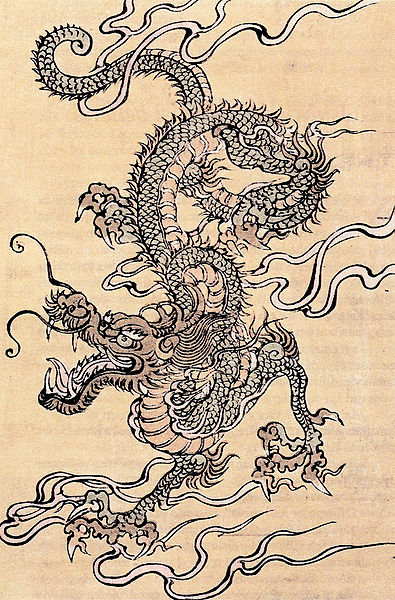
Ran across this when I was looking for a dragon image for the A10 v. Dragon post.  I think the A10 would stand a decent chance against this dragon.

Unsurprisingly, there are quite a lot of dragon images out there in the intertubes. Liked this one:

I’ve always liked the oriental dragon look.

I find it interesting that many creatures in the traditional magical bestiary are six-limbed – typically four legs and two wings, even though every large creature that we find in real life is quadrupedal.

Voting is now closed

And it’s A10 v. Dragon, by a nose. Expect your story in a couple days or so.

Remember, there is still time – up to the point where I mail it, in fact – to either befriend the Veil War Facebook page or become an email subscriber to the Veil War.

Last chance to change the future

Voting will soon close… Right now, A10 v. Dragon is in the lead by one vote. If you want to weigh in on the decision, now would be the time to do so – or else it’s this:

v.

Choose your own adventure!

Remember that everyone who either befriends the Veil War Facebook page or subscribes by clicking the “Follow the Veil War” link at the bottom of the page will get a free bonus story. You have up until the moment I send it to register and since I don’t know when I’ll send it, it would behoove you to sign up instantly. And I would just like to go on record as being a firm supporter and admirer of the word “behoove.”

I have to admit that just now I am a little frustrated with the whole bonus story endeavor. Because I came up with a really awesome story last Thursday – an actual Christmas story that was just peachy in every way. The Christmas element was not gratuitous: it advanced the story in a significant and (I think) clever way. It would have had atmosphere, cool special effects, and a nice dollop of gosh-wow coolness.

There were only two problems: 1) there was no way on God’s Green Earth that I could ever write it before Christmas given all the travel and family visitation going on and 2) it is set too far in the future of the story, and would give away too much info. So I reluctantly set aside that idea and came up with a few more. Last night, I arrived, weary, back at my fortress in the wilds of Virginia and today I will write the story. But I can’t start just yet.

Since I am equally fond of all of these ideas; and since I will write them all eventually at some point – you can pick your bonus story! You decide! You! Vote for your favorite with the poll thingy below:

I’ll close the voting sometime this afternoon when I’m ready to start writing.

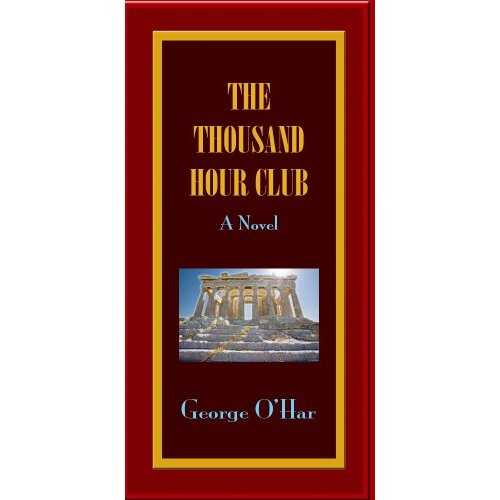
The Really Big Idea: George O’Har

George O’Har has a special place in my heart, because he is the first actual, published author to talk to me and say anything besides, “You’re in my way.” In this week’s Big Idea post, George explains that The Thousand Hour Club is more than a road novel. An attempt to respiritualize the American experience is a bold endeavor, but one that has noble antecedents. Tolkien consciously envisioned the Lord of the Rings as a new myth for the West, a founding myth to recenter and correct modern life. A road novel might not aim for the same place in the pantheon but where are today’s lives of the saints? Perhaps a road novel is a good way to sustain – or having lost, recover – the faith in founding myths.

A Big Idea Disguised As a Small Idea, Or Isn’t It Pretty To Think So?

I first started writing The Thousand Hour Club over a decade ago. The plan for the novel was to base it on my own life experiences, a plan that involved using carefully selected moments of my life as a civilian and then move on to what happened, again using carefully selected moments, when I joined the Air Force. I did not think life in the military would be the focus of what I wrote, but that’s how it turned out. The story never did have much of a plot. Essentially, I was telling a tale about a basically good young man growing up in what I believed then and believe now is the best country in the world: America. My thinking was that if I told the story well-enough, and used humor and a strong central character as ‘literary devices,’ much like Twain and Joyce used similar motifs, readers would come along. Editors and agents in New York, of course, never much went for my approach. But why they didn’t is a topic for another time.
Over the years, I rewrote the manuscript, start to finish, seven or eight times. I did the usual things writers do. Then one day, at lunch with a Jesuit friend of mine, we got to talking about how America was losing contact with its “unifying symbols,” and that a nation separated from the clarifying power of what had made it great in the first place might well be doomed. In the middle of this conversation—I remember it to this day—I was struck by the idea that that was exactly what I was attempting to do in The Thousand Hour Club: reconnect America, through the peregrinations of its ironic and likeable 1st-person narrator, to its symbolic bases. In short, I was building a bridge to the past. Important to note here is that the narrator is not aware of this; he feels himself changing, being worked on, but he never articulates it.

What do I mean? The novel starts out in Fort Lee, NJ; it ends at the Acropolis. The town of Fort Lee is named after a Revolutionary War Fort. The Acropolis was in addition to being a sacred place also a fort, a military installation. My narrator ends up in Greece. In thinking about symbols, this becomes important since the idea of Greece exerted enormous influence on the Founding Fathers. You can see it in their writing and thinking, and in the buildings they designed. Now, I wasn’t quite using symbols the way Melville and Hawthorne did, but I was using them. This doesn’t happen much in contemporary writing for the simple reason that most American contemporary writers have completely forgotten about the symbols that used to mean so much to us. Like everyone else, writers assume what we have will always be there. They have forgotten the idea that what we have needs to be fertilized and maintained.

Here’s another example. Socrates is practically a character in the book. The Socratic notion of the primacy of the unseen wends it ways through the novel, through moments as mundane as heartbreak, or as serious as a death in the family. The very last scene in the novel has the narrator leaning against a tree in the Agora. He hears two Greek boys running. One of them hollers to the other, “Socrates! Socrates!” I won’t beat this into the ground, but this is a lovely solution to a problem: how can I get readers to believe Socrates is as vitally alive and important today as he was in 5th century Athens? By having the narrator hear his name now in the exact same place his name was spoken centuries ago when he was teaching.

I was strongly influenced by Twain and Kerouac, so it will come as no surprise that The Thousand Hour Club is a road book. On the Road can be seen in a variety of ways, but I tend to see the novel as Kerouac’s attempt, through Sal and Dean, to respiritualize America. Kerouac uses Buddhism. So do I, as well as Christianity and Islam. Kerouac, and not just in On the Road, uses elevation as a symbol for awareness (like Mann). The notion of moving characters up and down—on mountains, in aircraft, crossing bridges—is how this idea shows up in The Thousand Hour Club, which is very much and deliberately a spiritual novel.

Now, many folks who read the book will glide right past this idea of reconnecting to America’s symbolic past. Readers would not be likely to overlook the spiritual angle, since nature and the idea of sacred places and spirituality per se (the presence of three major religions) run through the novel like a river. Anyway, I just started out telling a story. What I ended up with, I hope, is something better and more enduring. How this happened is almost entirely by accident. I didn’t deliberately set out to do any such thing. I wanted to make readers laugh and feel good.

Yet when I looked back at my work in progress after lunch with my Jesuit friend I realized the ingredients were all there. I just hadn’t seen them. All it took to emphasize them was a bit of tweaking. So when people say they think Herman Melville set out in Moby Dick to write a symbolic tale of a ship that stands for America, and a whale that probably represents nothingness, I wonder. What are the odds that he simply wanted to tell a story based, to some extent, on his own life and travels? And that later on, when he was reviewing the situation, he understood that he had accomplished something bigger. Hey; I’m just guessing. But I’m looking at Melville as a writer. I’m not a critic trying to demonstrate my importance.

And finally, a basic problem any writer has in putting together a book is how to make it deeper (if deepening is your aim). What experience has taught me is that this deepening process is only available to the writer through rewriting and revising. It is not something that can be jammed into a novel. You can’t say, I’m going to write a novel about Truth, Justice, Racism, or Love. If you’ve told an accurate story, gotten the details right, you may when you’re panning for these deeper things (Truth, Love et. al.) actually find them. The deeper stuff rises to the surface. It comes up naturally. It is an effect, a result. It is almost never an input.

Buy the Thousand Hour Club: Amazon

Follow the author on Twitter.

Merry Christmas

This would have been a merry Christmas for me regardless, as I am with my family; there has been good food and gifts already, and yet more to come.
 
But this Christmas has been a little more merry and joyful thanks to all of you. Your comments and emails, your support and the simple fact that you’ve been reading is a great and wonderful gift.
 
So thanks to all, and I wish you a joyous and merry Christmas. And I hope no goblins interrupt your celebrations.